
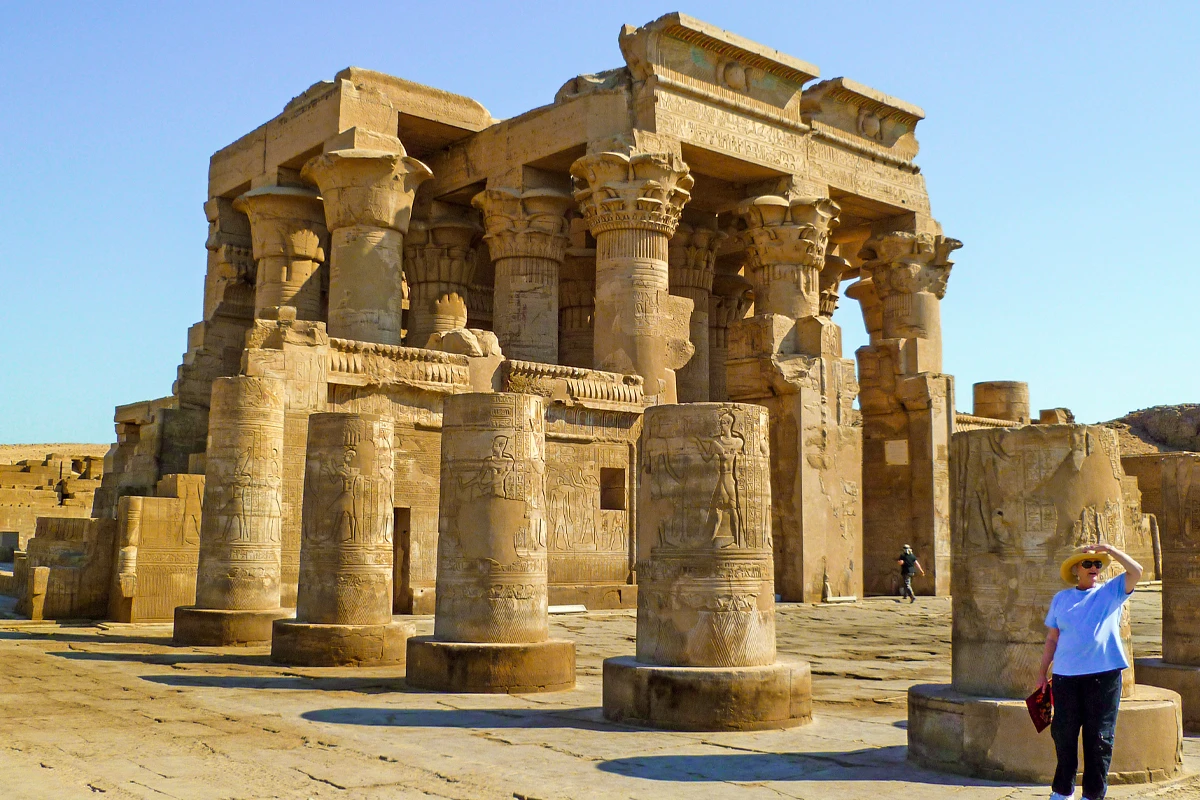
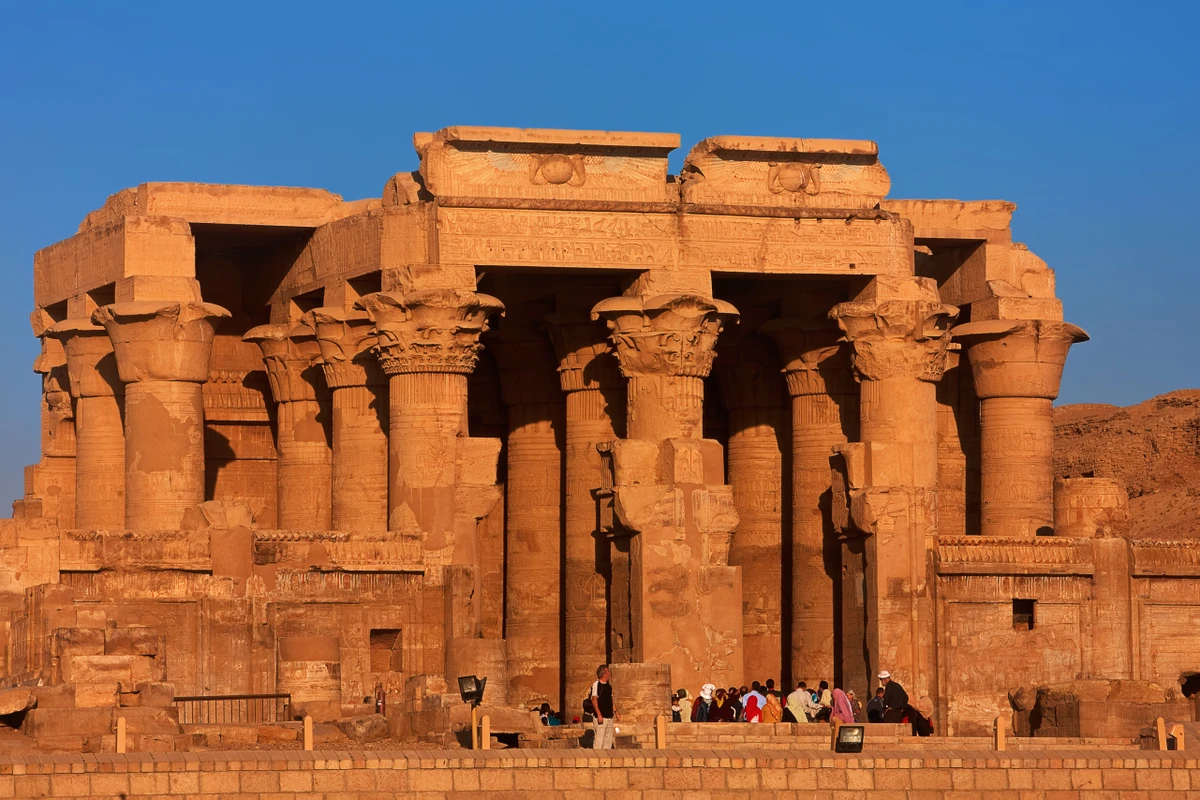
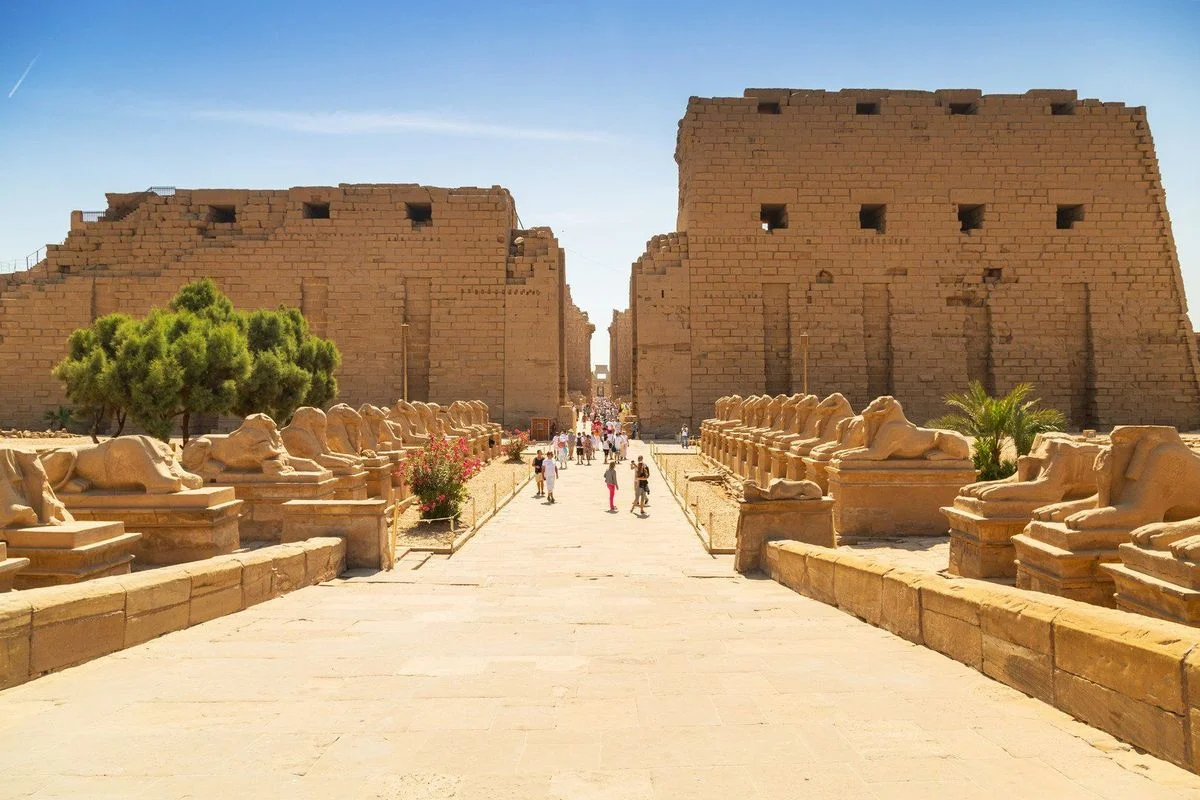
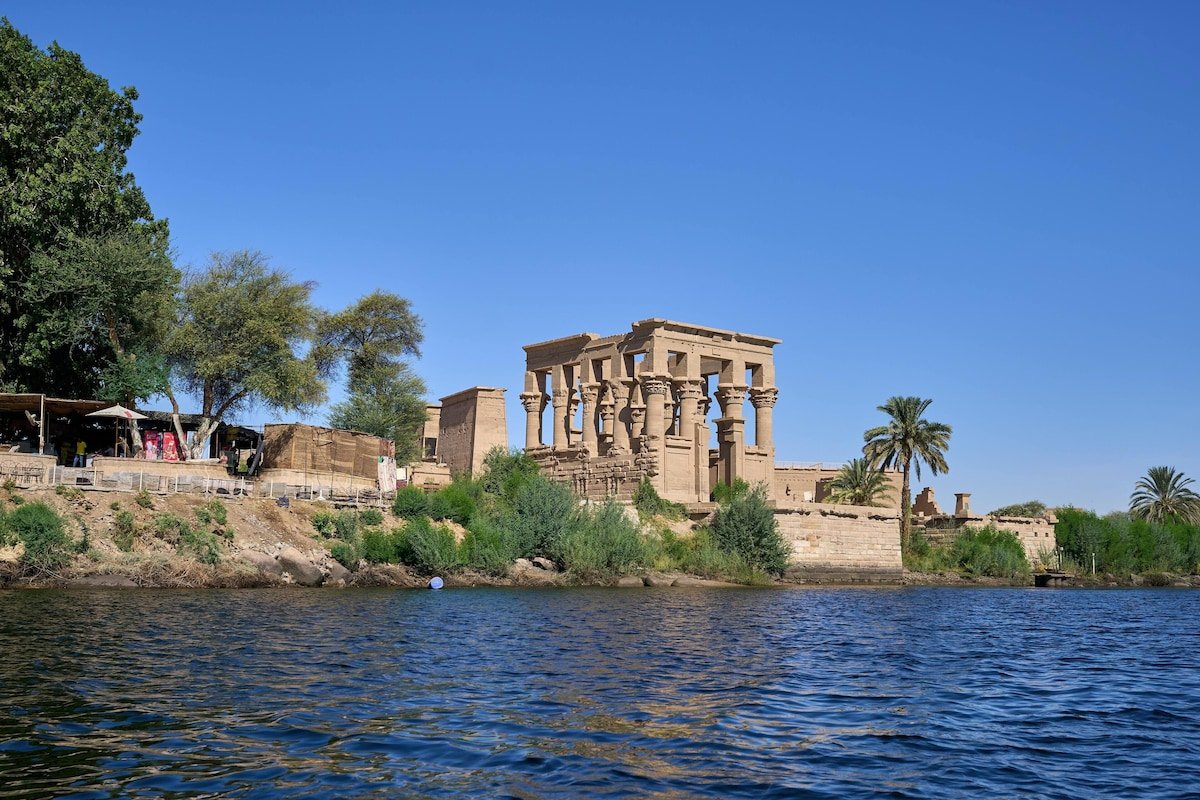
Discover three of Upper Egypt’s most remarkable ancient temples on this full-day journey from Luxor. Travel south along the scenic Nile Valley to explore the magnificent temples of Esna, Edfu, and Kom Ombo, each offering a unique insight into Egypt’s Greco-Roman heritage. Begin at the Temple of Esna, dedicated to the ram-headed god Khnum and admired for its beautifully decorated hypostyle hall. Continue to the spectacular Temple of Edfu, one of the best-preserved temples in Egypt, where towering pylons, impressive halls, and detailed inscriptions tell the story of Horus, the falcon god. After lunch, visit the unique double Temple of Kom Ombo, dedicated to both Sobek, the crocodile god, and Horus the Elder. Explore its perfectly symmetrical design, fascinating reliefs, and the nearby Crocodile Museum, home to ancient mummified crocodiles. Accompanied by an expert Egyptologist guide, you’ll discover the rich history, architecture, and mythology behind these extraordinary monuments while enjoying a comfortable drive through the beautiful landscapes of Upper Egypt.
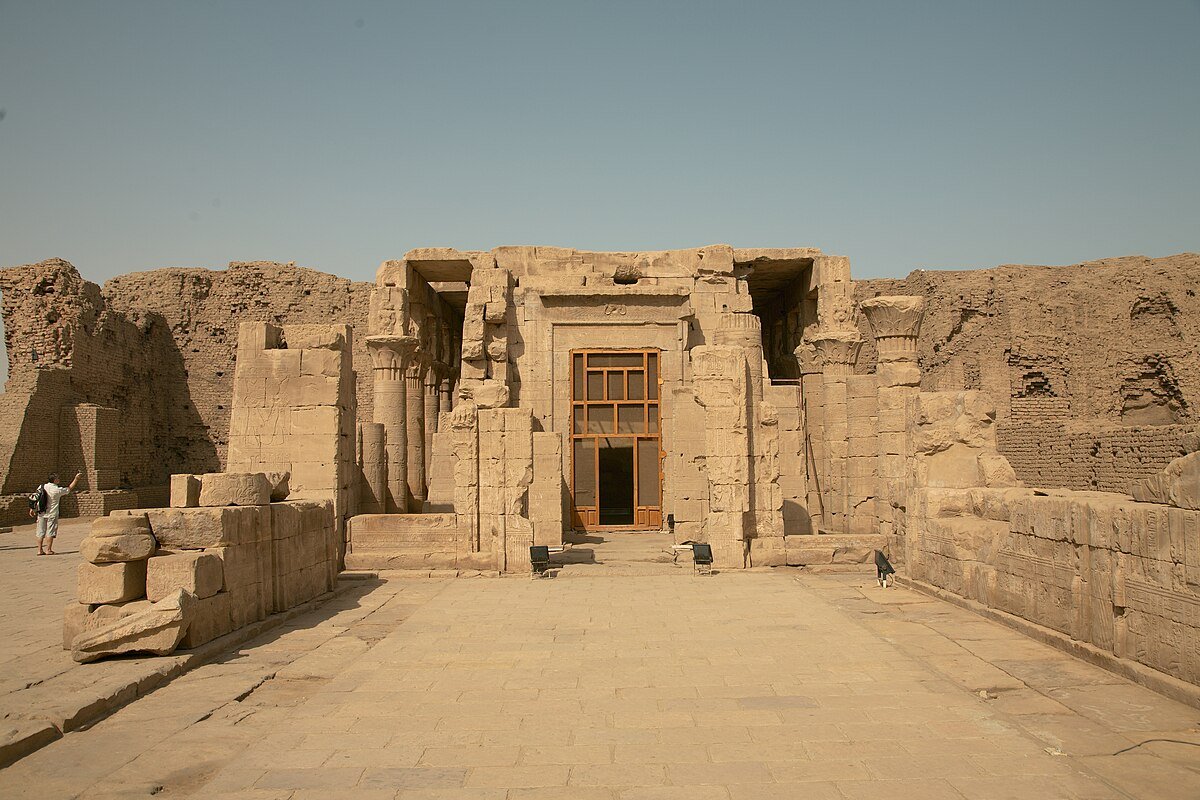
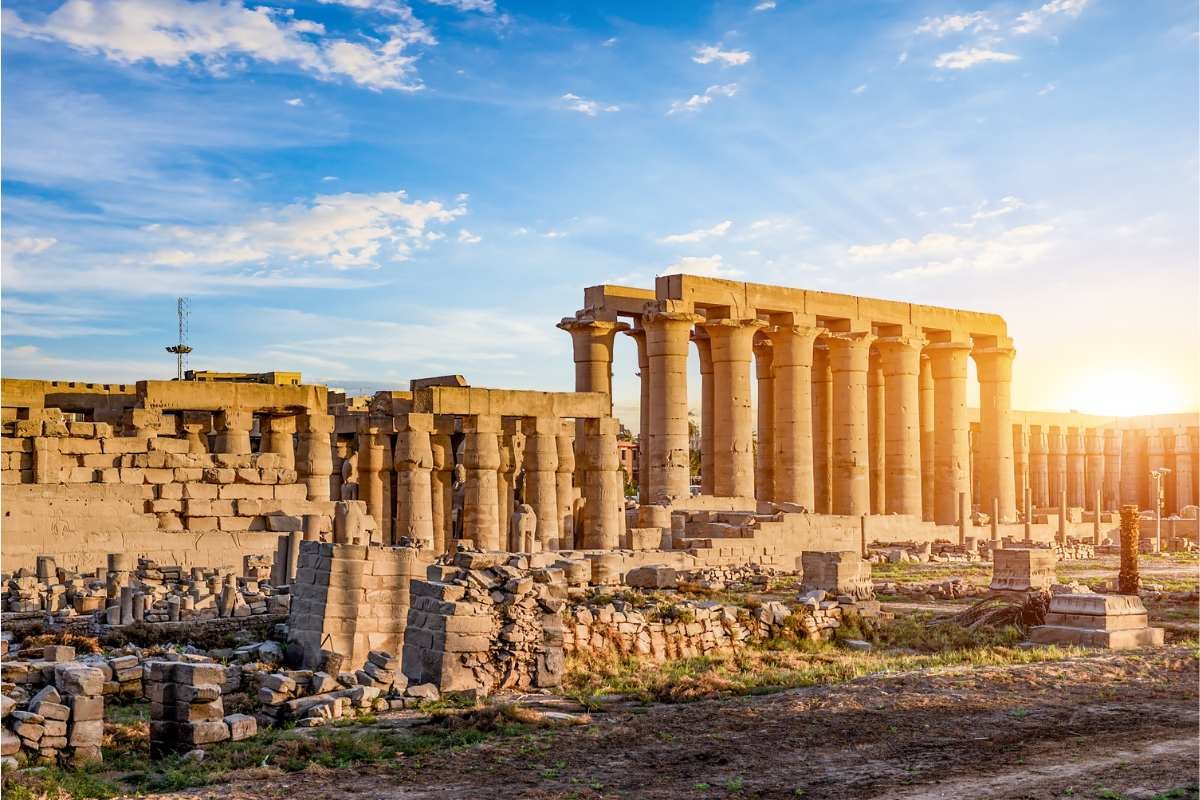
Esna is located on the left bank of the River Nile, about 55km south of Luxor. This temple was built by the Greek and Roman rulers and it was dedicated to the ram-headed god Khnum. The text tells us that the Eighteenth Family kings built this temple in the city and that another part was added by the kings of ‘Sais’ and the temple was finally finished by King Ptolomy. Moreover, during the reign of the Roman emperors , a hall with 24 columns was built to be the temple facade. This great Roman hall is the only trace left from the old temple. The other parts of the temple were destroyed or are buried underneath the modern city. It is also considered one of the most beautiful halls in Egypt because of its accurate dimensions, beautiful columns, the religious texts inscribed on its columns and exterior and interior walls, justifying the theories of the creation of the world and the origins of life. All these texts were inscribed during the reign of the two emperors ‘Tragan’ and ‘Hadrain’ during the second century A.D. The last of these inscriptions were added in the reign of ‘Dikius’ in 250 A.D.
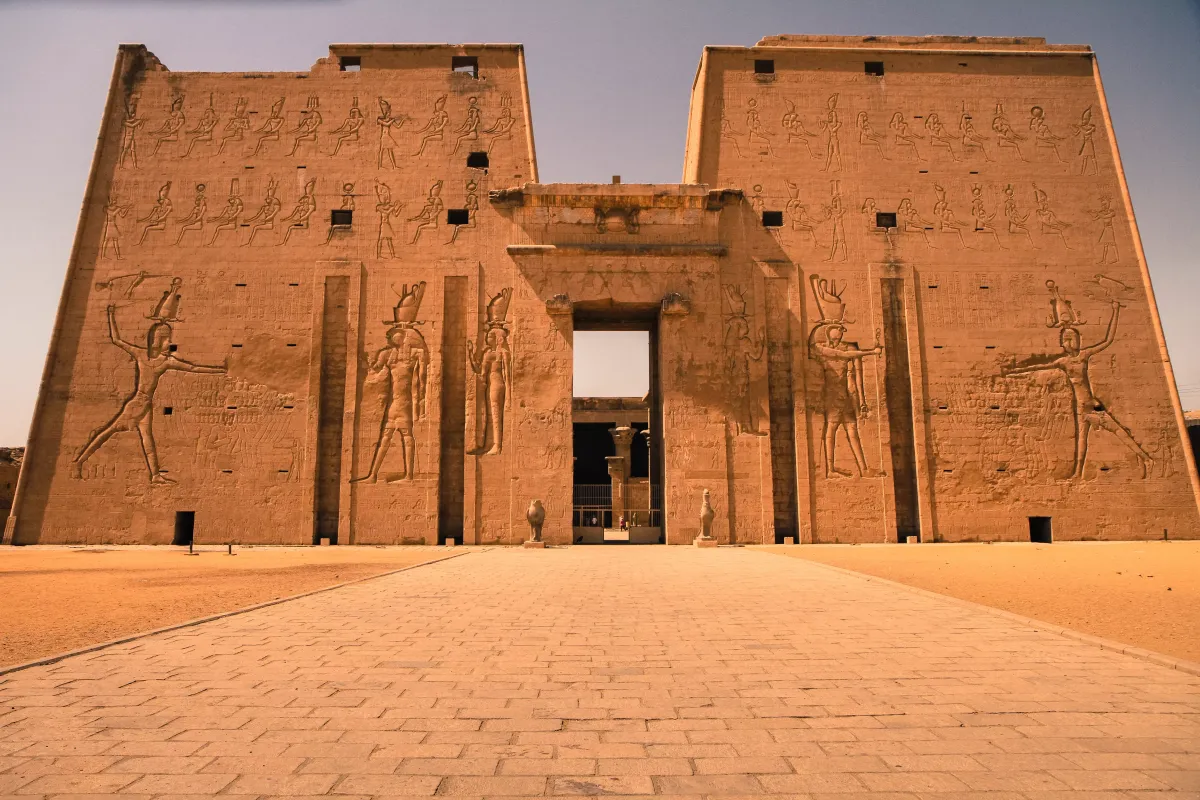
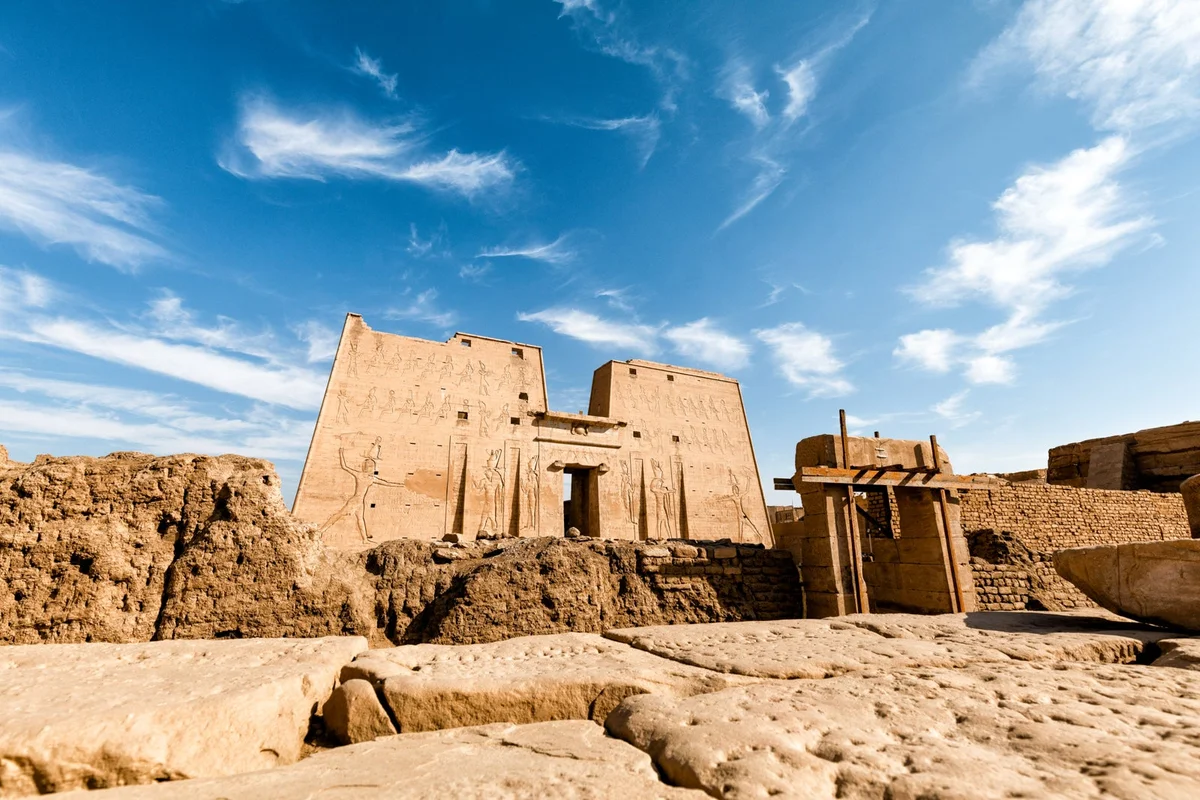
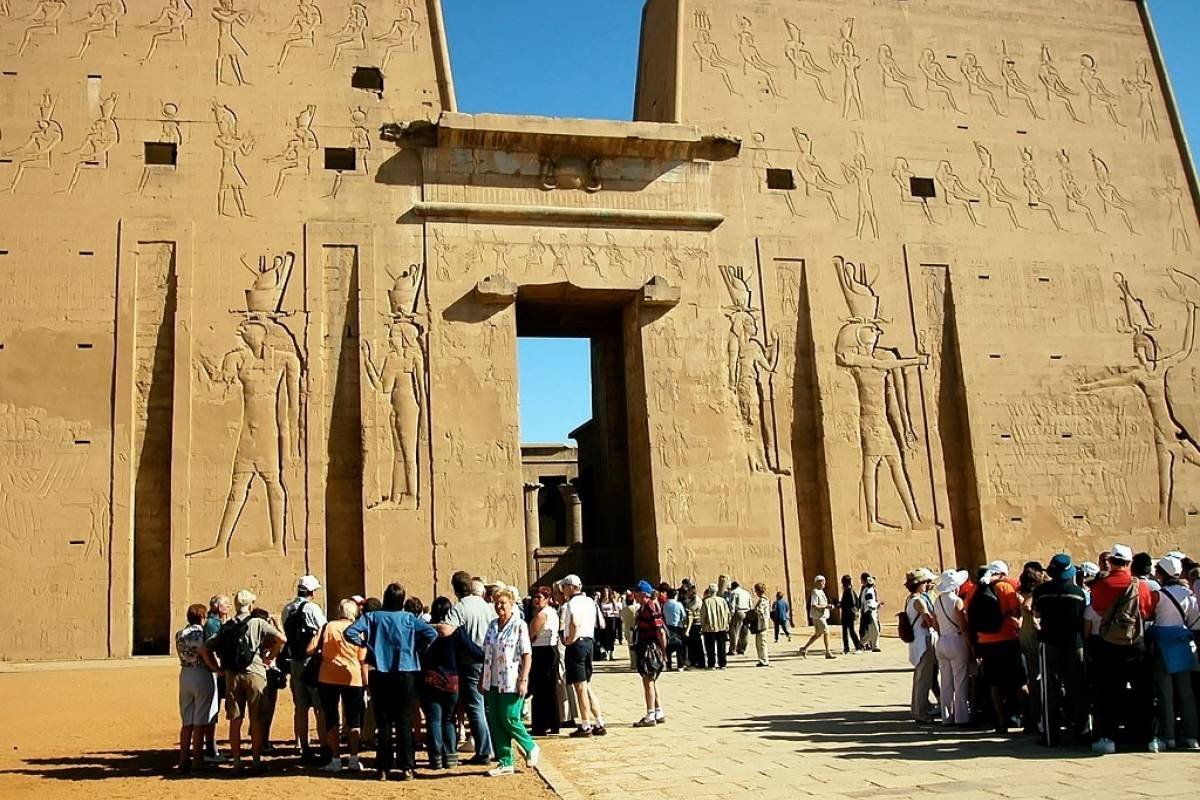
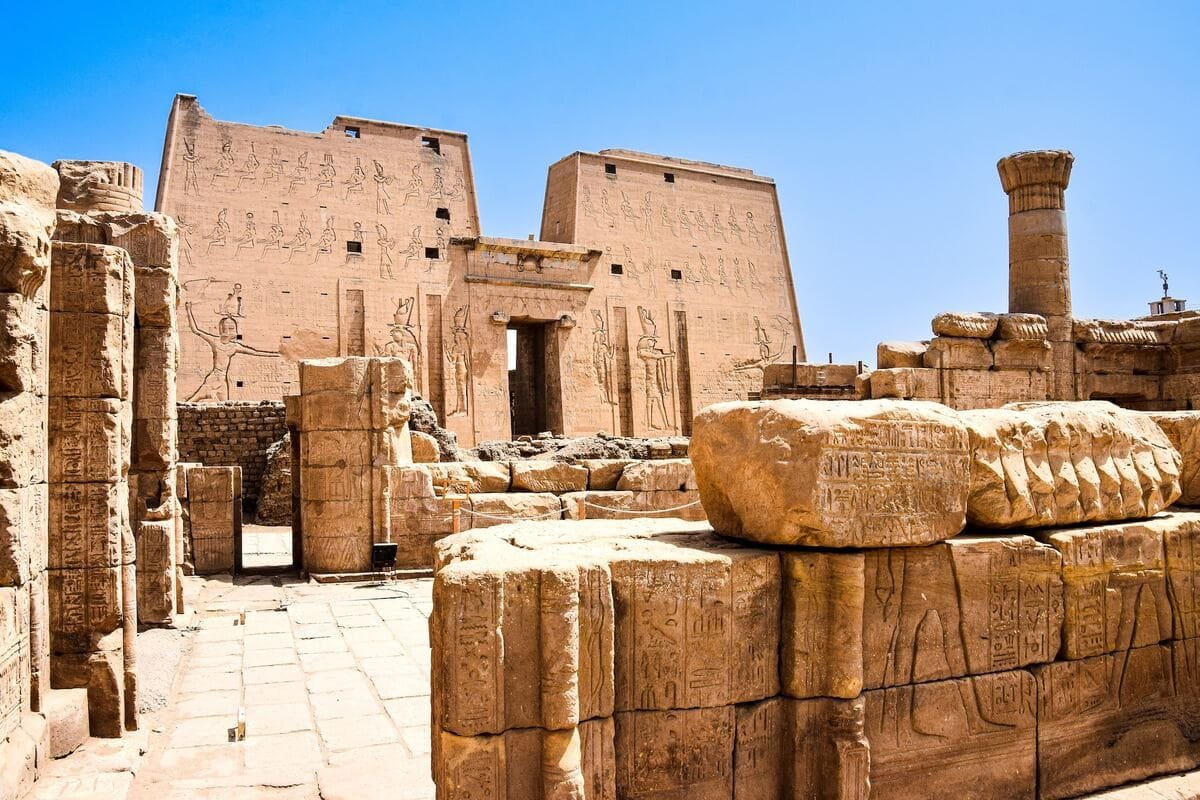
Edfu was an important city in Upper Egypt, lying on the left bank of the Nile, about 100km south from Luxor. During the reign of the Old State, Edfu (the capital of the second province in Upper Egypt) enjoyed enormous prosperity. Nowadays, this city is known by its grand temple which was devoted to the worship of the great God of the Heavens falcon ‘Horus’, the God of Baholt town. This temple is considered one of the most important religious monuments in Egypt. During the reign of King Ptolomy III (237 B.C.), the construction of Edfu temple began, yet it was not finished until 57 B.C. because of some intrigues and plots hatched at Thebes at that time. The length of the temple is 137m, while its width is 79m and its height 376m. Tourists are undoubtedly fascinated by the wonderful condition of the perfectly preserved temple — its buildings, ceilings, halls, etc… are all complete and intact so that one might imagine seeing the priests and their assistants in their snow-white robes wondering here and there. Furthermore, the temple is surrounded by a number of secondary buildings attached to the temple, such as the ‘Mammsi’. It is noteworthy that the temple is characterized by an enormous quantity of inscriptions covering the walls
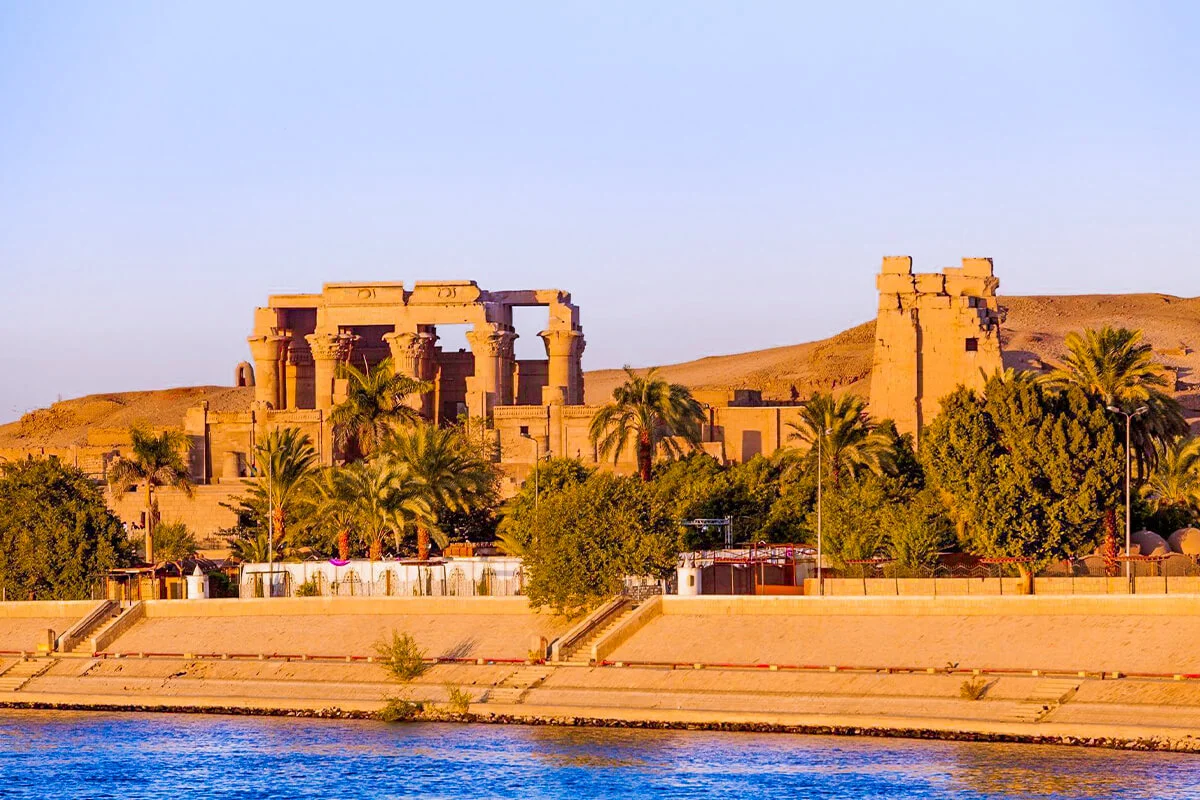
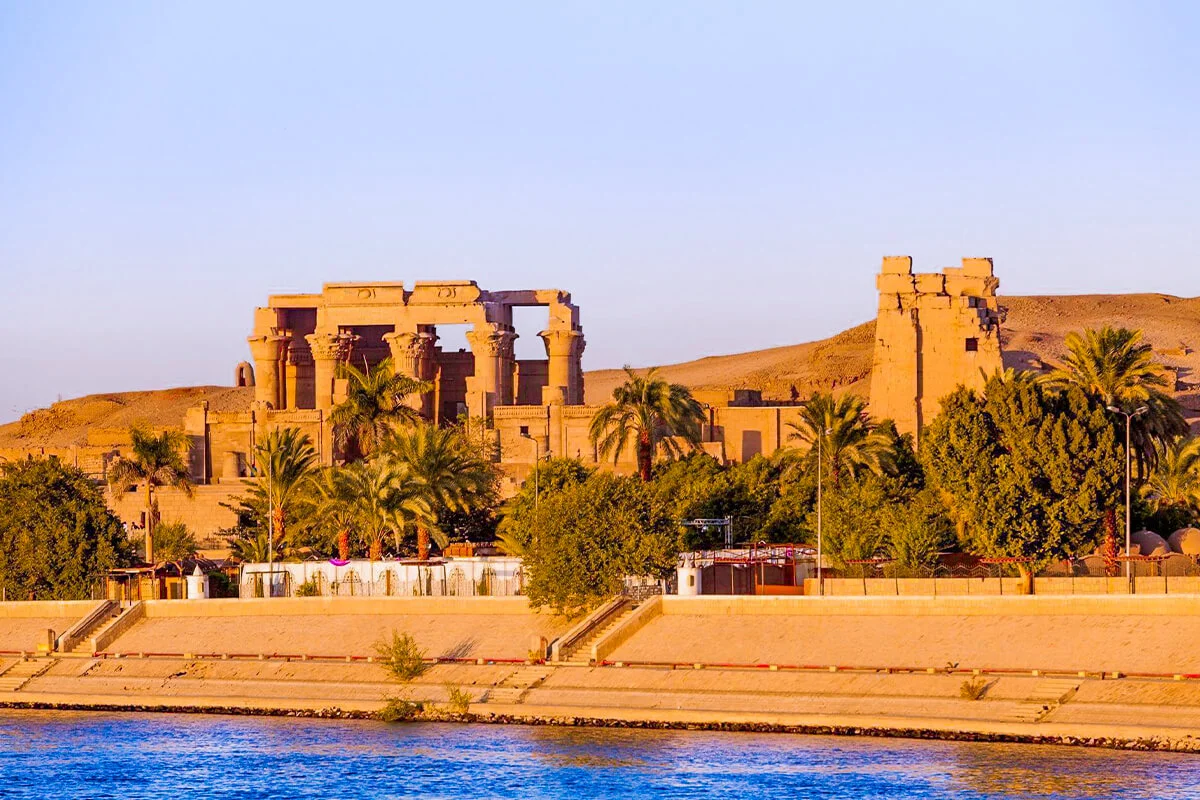
OmboKom is an agricultural town in Egypt famous for the Temple of Kom Ombo. It was originally an Egyptian city called Nubt, meaning City of Gold (not to be confused with the city north of Naqada that was also called Nubt/Ombos). It became a Greek settlement during the Greco-Roman Period. The town’s location on the Nile 50 km north of Aswan (Syene) gave it some control over trade routes from Nubia to the Nile Valley,
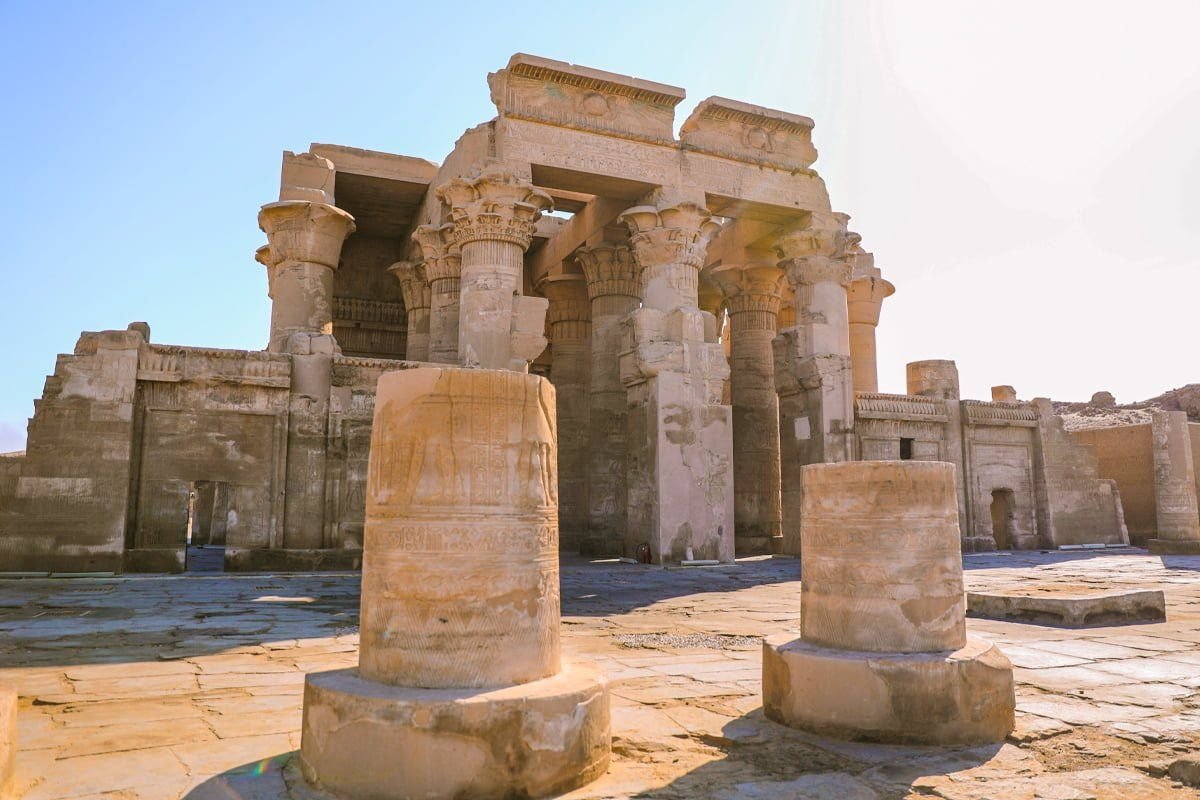
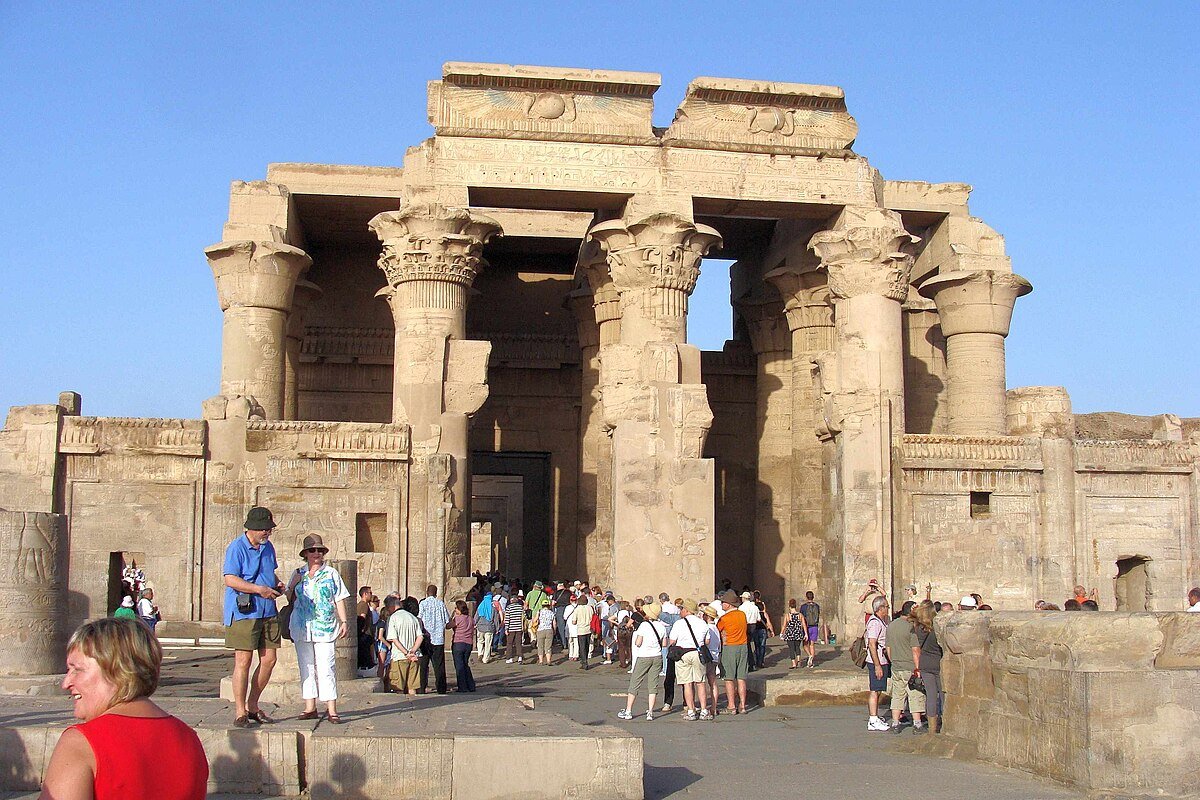
The Temple of Kom Ombo is an unusual double temple built during the Ptolemaic dynasty in the Egyptian town of Kom Ombo.Some additions to it were later made during the Roman period. The building is unique because its ‘double’ design meant that there were courts, halls, sanctuaries and rooms duplicated for two sets of gods.The southern half of the temple was dedicated to the crocodile god Sobek, god of fertility and creator of the world with Hathor and Khonsu. Meanwhile, the northern part of the temple was dedicated to the falcon god Haroeris, also known as Horus the Elder, along “with Tasenetnofret (the Good Sister, a special form of Hathor) and Panebtawy (Lord of the Two Lands).The temple is atypical because everything is perfectly symmetrical along the main axis.
The temple was started by Ptolemy VI at the beginning of his reign and added to by other Ptolemys, most notably Ptolemy XIII who built the inner and outer hypostyle halls. The scene on the inner face of the rear wall of the temple is of particular interest, and “probably represents a set of surgical instruments.
Much of the temple has been destroyed by the Nile, earthquakes, and later builders who used its stones for other projects. Some of the reliefs inside were defaced by Copts who once used the temple as a church. All the temples buildings in the southern part of the plateau were cleared of debris and restored by Jacques de Morgan in 1893. A few of the three-hundred crocodile mummies discovered in the vicinity are displayed inside the temple.
Bring comfortable walking shoes, a hat, sunscreen, sunglasses, your camera, passport (or a copy), and some cash for entrance fees, drinks, and personal expenses.
Yes, the tour includes lunch at a local restaurant. Drinks are usually available at an additional cost unless otherwise stated.
The journey is spread throughout the day, with Esna located about 55 km from Luxor, Edfu about 100 km farther south, and Kom Ombo approximately 65 km north of Aswan.
From
From
There are no reviews yet.