


 info@luxorlocalguide.com
 +20122-176-9255

Luxor West Bank Half Day2
| Items | price |
|---|---|
| Tour Guiding Service | |
| Transport for 2 people | |
| Entrance Fees per person | |
$[0]
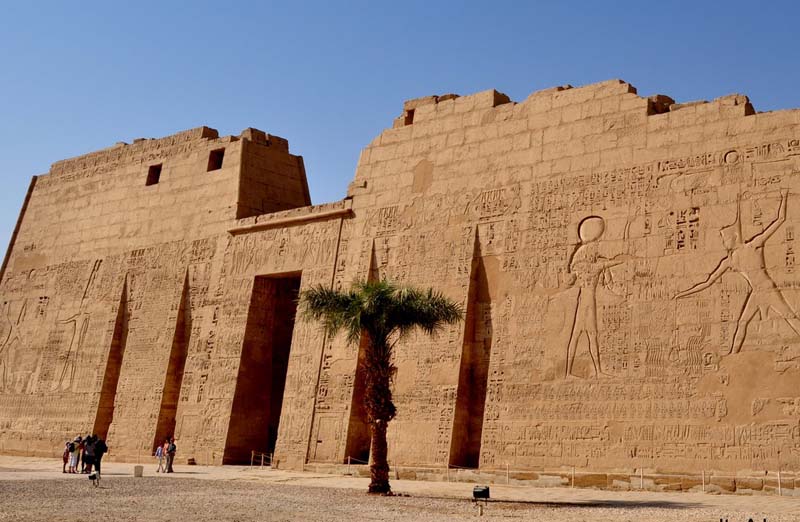
Habu Temple
This is the most beautiful temple in the weast bank ,it is well preserved .All along the border between the fertile section of the Valley and the hills we find Temples and one palace. The southern most temple is that of Ramesses III located at Medinet Habu . The palace, one of the southernmost monuments in the Valley, is at Malkata , just south of Deir el-Medina, and belonged to Amenhotep III , but was probably also inhabited by a few of his successors. At one time, it was a huge complex.
Tombs of the Nobles
The Tombs of the Nobles actually comprises a number of distinct areas on the West Bank at modern Luxor (Ancient Thebes). These areas mostly lie in five different regions. Farthermost north is an area known as el-Tarif, where large, row tombs were dug during the late Second Intermediate Period and early Middle Kingdom. Just south of el-Tarif is Dra Abu el-Naga, which is a hillside with about 80 numbered tombs most belonging to priests and officials of the 17th through 20th dynasty, including some rulers of the 17th dynasty. Just southwest of Dra Abu el-Naga is an area called El-Assasif, where there are 40 tombs, mostly from the New Kingdom and later. Just south of El-Assasif is El-Khokha, a hill with five Old Kingdom tombs and 53 numbered tombs from the 18th and 19th dynasty.
Deir El-Medina
Deir el-Medina is an ancient Egyptian village which was home to the artisans who worked on the tombs in the Valley of the Kings during the 18th to 20th dynasties of the New Kingdom period The settlement’s.
Colossi of Memnon
These two huge statues of Amenhotep III originally sat in front of the mortuary temple of the king. Unfortunately, this temple was destroyed throughout the centuries. It is believed that it was built of white sandstone, gold and silver. The statues show Amenhotep seated on his throne with the two Nile gods of upper and lower Egypt uniting the two lands, at his sides. It is also interesting to know that on the right of each statue appears a small figure of Queen Tiye, wife of Amenhotep III and on the left Queen Mutemua, his mother. The colossi are made of sandstone. Part of the north colossus fell in the earthquake of 27 BC. During the Roman period, this site became very popular. Authors and travellers wrote verses on the stone.


